

Handheld Spirometers Compared with Desktop Lab Systems
Galway Ventshare >> Medical>> Handheld Spirometers Compared with Desktop Lab Systems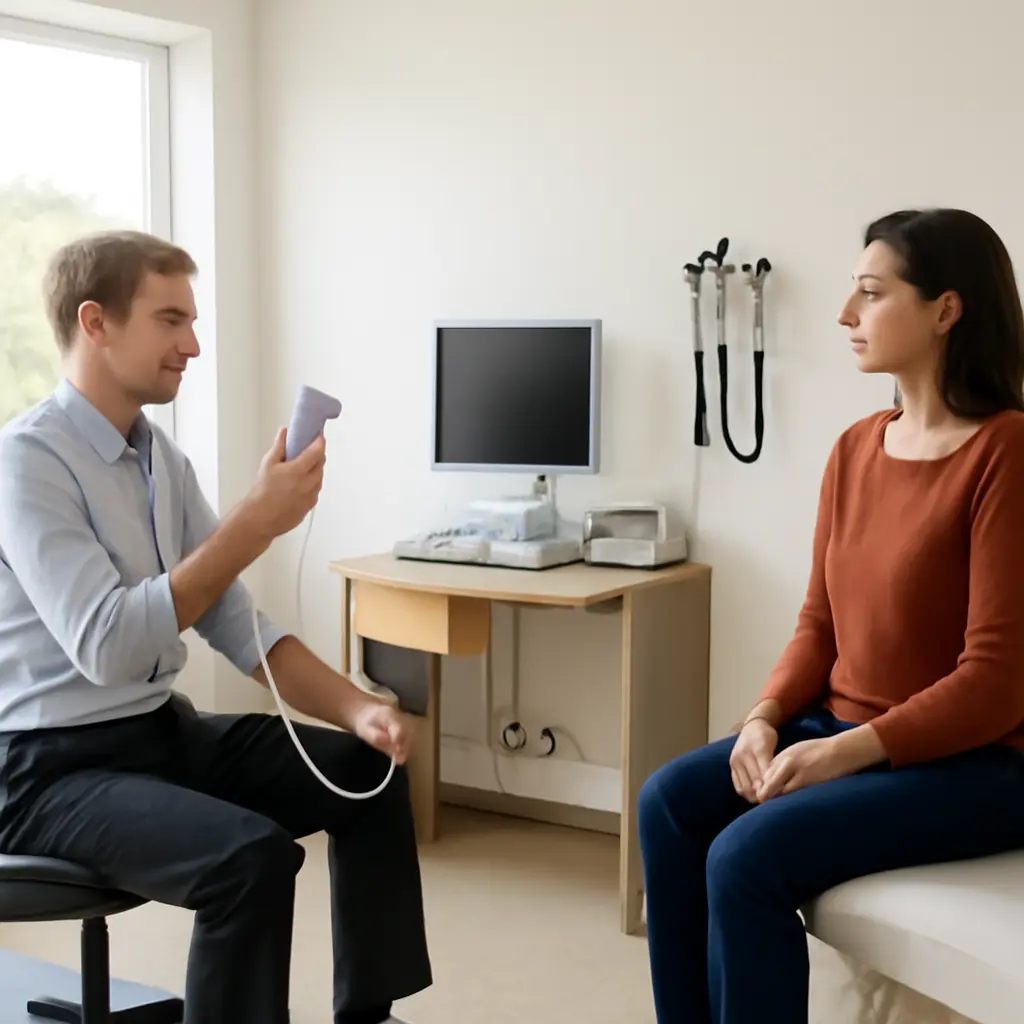
Handheld Spirometers Compared with Desktop Lab Systems
Handheld spirometers are portable devices that measure airflow and lung volume during breathing maneuvers; desktop laboratory systems perform similar tests with more extensive hardware, software, and quality-control capabilities. Neither format is automatically more accurate in every situation: agreement depends on the device, testing protocol, operator skill, and patient effort. Handheld units can make testing easier to deliver in primary care and remote settings, while laboratory systems are better suited to comprehensive pulmonary-function assessment. Understanding their measurement capabilities, validation evidence, practical trade-offs, and appropriate clinical roles helps clinicians choose the right tool without treating a screening result as a complete diagnosis.
Measurement accuracy and handheld spirometer performance
Spirometry measures the volume and speed of air a person can exhale or inhale, most commonly after taking a full breath and blowing out forcefully. The American Thoracic Society (ATS) and European Respiratory Society (ERS) define spirometry as a physiological test that measures the volume of air an individual can inhale or exhale as a function of time. A handheld spirometer is a portable instrument for obtaining these measurements, generally using a flow sensor or turbine and a display or connected software.
The key comparison is not simply “portable versus desktop,” but whether a particular device and test session produce technically acceptable, repeatable results. ATS/ERS standards set accuracy requirements for spirometers, including a maximum permissible volume error of ±2.5% under specified testing conditions. The standards also emphasize that patient coaching, calibration verification, maneuver acceptability, and repeatability matter: a technically capable instrument cannot compensate for a poor-quality blow.
Common handheld formats include standalone office spirometers, smartphone-connected devices, and portable instruments designed for field or home use. Desktop laboratory systems may add multiple testing modules, advanced interpretation tools, and dedicated quality-assurance workflows. These categories overlap: portability alone does not establish clinical validation, and a desktop system still requires trained staff and sound procedures.
Core measurements: FEV1, FVC, and the ratio
Forced expiratory volume in one second (FEV1) is the volume exhaled during the first second of a forced breath; forced vital capacity (FVC) is the total volume exhaled during that maneuver. The FEV1/FVC ratio helps clinicians identify airflow obstruction. A low ratio can support an obstructive pattern, but interpretation requires suitable reference values, test quality, symptoms, and clinical context. Spirometry alone does not identify every cause of breathlessness or establish all lung diseases.
Both handheld and desktop devices can report these core values when properly designed and used. Results can nevertheless differ if devices use different sensors, software, reference equations, or quality checks. Clinicians should use consistent equipment and procedures when tracking change over time, and should review the flow-volume curve and test-quality indicators rather than relying only on a single displayed number.
Accuracy, repeatability, and test quality
Accuracy describes how closely a measurement approaches a reference value; repeatability describes how closely repeated acceptable maneuvers agree. ATS/ERS 2019 technical standards generally require the two largest acceptable FEV1 values and the two largest acceptable FVC values to be within 0.150 L for adults, with age-specific criteria for children. This is a quality criterion for a test session, not proof that every device or measurement is accurate in all circumstances.
The National Institute for Occupational Safety and Health (NIOSH) recommends spirometers that meet recognized performance standards and stresses training and quality assurance in occupational testing. In practice, clinicians should check the manufacturer’s validation information, device maintenance requirements, software version, and applicable standards. A handheld instrument used without verification or trained supervision may yield unreliable results even if its specifications appear suitable.
Clinical roles of handheld and desktop spirometry
The choice of system should follow the clinical question. Handheld spirometry is often valuable when the goal is accessible measurement near the patient, such as an initial assessment or monitoring plan. A pulmonary-function laboratory is more appropriate when clinicians need a broader evaluation, specialized testing, or additional technical support. These roles are complementary rather than mutually exclusive.
Primary-care assessment and screening
A handheld device can bring spirometry into a clinic that does not have a dedicated lung-function laboratory. It may help assess patients with respiratory symptoms and support follow-up of known disease, provided that testing is performed by trained staff and interpreted in context. The U.S. Preventive Services Task Force recommends against screening asymptomatic adults for chronic obstructive pulmonary disease (COPD), concluding that screening has no net benefit in that population. This recommendation does not rule out diagnostic spirometry for people with relevant symptoms or clinical indications.
Portable testing should therefore not be equated with indiscriminate screening. A reading suggesting obstruction should prompt review of test quality and clinical history and, where appropriate, confirmatory testing or specialist assessment. The GOLD strategy likewise emphasizes spirometric confirmation of COPD in the appropriate clinical context rather than diagnosis from symptoms or a device label alone.
Pulmonary-function laboratories and comprehensive testing
Desktop laboratory systems are commonly used where testing requires a controlled environment, detailed quality review, or procedures beyond basic spirometry. Depending on the laboratory’s equipment, a full pulmonary-function evaluation may include lung-volume measurement and assessment of gas transfer, such as diffusing capacity. These tests provide information that a basic handheld spirometer generally cannot supply.
Laboratories can also support complex cases, preoperative assessment, specialist evaluation, and investigation of results that do not fit the clinical picture. A desktop system is not inherently immune to errors: calibration checks, infection-control procedures, operator competency, and interpretation remain essential. Its principal advantage is the potential to integrate more testing and quality oversight in a dedicated service.
Remote care and longitudinal monitoring
Connected handheld spirometers can transmit measurements to clinicians or patient portals, making them useful for selected remote-care and monitoring programs. The European Respiratory Society has described telemonitoring as a way to support respiratory care, while noting that its value depends on implementation, patient engagement, and clinical response pathways. A device reading is not a substitute for an examination when symptoms worsen or urgent care is needed.
Longitudinal comparisons are strongest when the same validated device, coaching approach, and testing conditions are used over time. Changes in effort, posture, medication timing, infection status, or technique can affect results. Programs should define who reviews transmitted values, how abnormal results are escalated, and what patients should do if they experience worsening breathlessness.
Practical trade-offs between handheld and desktop systems
Portability, cost, workflow, and technical breadth shape the choice between systems. A handheld instrument may reduce travel and make testing more convenient, but convenience does not guarantee diagnostic quality. Desktop laboratory equipment may require more space and staff coordination while offering a broader testing environment.
Access, workflow, and cost
Handheld spirometers can be deployed in primary-care rooms, community services, occupational settings, and some home-monitoring programs. Their smaller footprint may help organizations offer testing closer to patients. Actual costs vary by device, consumables, software, training, maintenance, and local reimbursement; a low purchase price should not be treated as the total cost of a dependable service.
Desktop systems typically involve a larger equipment investment and a more specialized workflow, but may serve as a platform for a wider range of pulmonary-function tests. For organizations, the relevant comparison includes the cost of staff time, quality assurance, repeat testing, referrals, and the consequences of misleading results—not just the device price.
Training, infection control, and quality assurance
Spirometry depends on clear instructions, effective coaching, and recognition of invalid maneuvers. ATS/ERS standards recommend documenting test quality and applying acceptability and repeatability criteria. Staff training should cover device operation, patient preparation, contraindications or precautions, curve review, cleaning, and the response to poor-quality or unexpected results.
Because patients exhale forcefully through the equipment, infection prevention also matters. Clinics should follow manufacturer instructions and relevant local infection-control guidance for filters, mouthpieces, and reusable components. Portable devices do not remove these responsibilities; their use across multiple locations can make consistent procedures especially important.
Interpreting results and deciding when to refer
Interpretation should account for the patient’s age, height, sex, relevant reference equations, symptoms, and test quality. The ATS/ERS interpretive strategies recommend using lower limits of normal and z-scores where appropriate rather than relying automatically on a fixed percentage of predicted values. A normal spirometry result does not exclude every respiratory disorder, and an abnormal result may require repeat testing or broader investigation.
A useful operational rule is to treat handheld spirometry as one component of a diagnostic pathway. If the result is poor quality, inconsistent with symptoms, or likely to change important management, repeat testing or referral to a pulmonary-function laboratory may be appropriate. The decision depends on clinical judgment and local guidance, not on portability alone.
How to choose the right spirometry system
A practical selection process begins with the intended use. Organizations should identify whether they need basic spirometry for symptom assessment, serial monitoring, occupational testing, or a comprehensive pulmonary-function service, then match the device and staffing model to that purpose.
- Confirm that the instrument meets applicable performance standards and has credible validation documentation.
- Check whether it reports the required measurements, curves, quality grades, and reference equations.
- Assess calibration or verification procedures, maintenance, software support, infection-control requirements, and data security.
- Budget for staff training, repeat tests, interpretation, and referral pathways—not only equipment acquisition.
- Establish how results will be documented, reviewed, and acted on, including escalation for symptoms or concerning findings.
A comparison chart can help teams assess the trade-offs: handheld systems generally offer greater portability and easier deployment, while desktop laboratory systems commonly provide broader testing capability and a dedicated quality-review environment. Neither category should be selected on the assumption that it is universally more accurate.
Conclusion: matching handheld spirometry to the clinical question
Handheld spirometers can extend access to basic lung-function measurement, while desktop laboratory systems support more comprehensive assessment and specialized quality workflows. In both settings, accuracy depends on validated equipment, trained operators, acceptable and repeatable maneuvers, and careful interpretation. The central lesson is to match the system to the clinical purpose and to treat spirometry as part of—not a replacement for—a complete clinical assessment.
Clinicians and organizations considering a device should review ATS/ERS technical standards, verify manufacturer performance claims, and build a clear plan for training, quality assurance, and referral. Patients should seek clinical advice about symptoms rather than relying on an isolated home or handheld reading.
Sources: Graham BL et al., “Standardization of Spirometry 2019 Update,” American Journal of Respiratory and Critical Care Medicine, 2019, https://doi.org/10.1164/rccm.201908-1590ST; Stanojevic S et al., “ERS/ATS technical standard on interpretive strategies for routine lung function tests,” European Respiratory Journal, 2022, https://doi.org/10.1183/13993003.01499-2021; National Institute for Occupational Safety and Health, Spirometry, https://www.cdc.gov/niosh/; U.S. Preventive Services Task Force, “Chronic Obstructive Pulmonary Disease: Screening,” https://www.uspreventiveservicestaskforce.org/uspstf/recommendation/chronic-obstructive-pulmonary-disease-screening; Global Initiative for Chronic Obstructive Lung Disease, Global Strategy for the Diagnosis, Management, and Prevention of COPD, https://goldcopd.org/; European Respiratory Society, “Digital respiratory health,” https://www.ersnet.org/.
Related Post

Neurological Problems Often Disguised as Simple Fatigue and Breathing
Neurological disorders can first appear as ordinary tiredness, shortness of breath, or reduced exercise tolerance…