
Handheld Spirometers Compared with Desktop Lab Systems

Handheld spirometers are portable devices that measure airflow and lung volume during breathing maneuvers; desktop laboratory systems perform similar tests with more extensive hardware, software, and quality-control capabilities. Neither format is automatically more accurate in every situation: agreement depends on the device, testing protocol, operator skill, and patient effort. Handheld units can make testing easier…

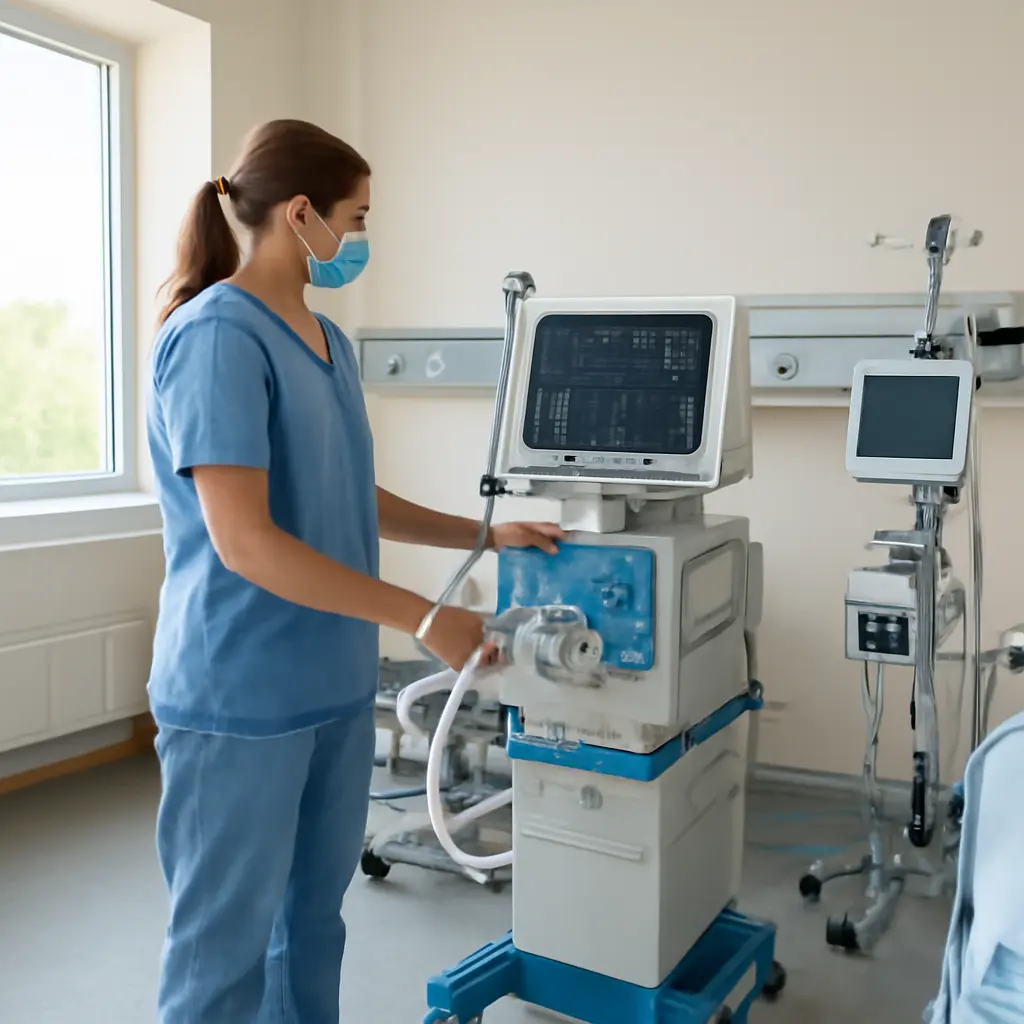
Invasive Support Compared with Noninvasive Options in Critical Care

Critical-care support uses treatments that sustain breathing or circulation when illness overwhelms the body. Invasive support—such as endotracheal intubation, mechanical ventilation, or vascular catheters—can provide reliable organ support but carries risks including infection, injury, sedation, and immobility. Noninvasive options, including oxygen, high-flow nasal oxygen, and noninvasive ventilation, avoid an artificial airway and may reduce some…

Why Water Vapor Needs Change Over Time in Critical Care

Water vapor needs in critical care change because a patient’s ability to warm and humidify inhaled gas changes with the illness, airway, respiratory support, and treatment plan. Water vapor—moisture present in gas—helps protect airway lining and support mucus clearance. The American Association for Respiratory Care (AARC) recommends humidification for patients receiving invasive mechanical ventilation, while…

Coughing Up Blood and Breathing Problems: Common Respiratory Causes

Coughing up blood, called hemoptysis, means blood or blood-streaked mucus is brought up from the lower respiratory tract. It can occur with infections and other airway or lung conditions, but breathing difficulty alongside it can signal a medical emergency. The cause cannot be identified reliably from appearance alone: clinicians consider how much blood there is,…

How Hospital Respiratory Teams Choose Between Nebulizers and Other Devices

Hospital respiratory teams choose among nebulizers, pressurized metered-dose inhalers (pMDIs), dry-powder inhalers (DPIs), and soft-mist inhalers by matching the device to the patient’s condition, ability to use it, medication, and infection-control needs. A nebulizer turns liquid medicine into an inhalable aerosol and can be useful when a patient cannot coordinate inhalation or use an inhaler…

Why rapid response teams exist and what they actually do

Rapid response teams (RRTs) are hospital-based groups that assess and treat patients whose condition is worsening before they suffer cardiac or respiratory arrest. They exist to bring critical-care expertise to the patient’s bedside sooner than a conventional escalation process might. Their work includes recognizing warning signs, stabilizing patients, advising bedside staff, and arranging transfer to…

Neurological Problems Often Disguised as Simple Fatigue and Breathing

Neurological disorders can first appear as ordinary tiredness, shortness of breath, or reduced exercise tolerance rather than an obvious problem with the brain or nerves. Conditions such as myasthenia gravis, Guillain–Barré syndrome, amyotrophic lateral sclerosis (ALS), and disorders affecting the brainstem can weaken the muscles used for breathing; others, including stroke and seizure, may disrupt…

The Suction Tools That Keep Airways Clear After a Tracheostomy

After a tracheostomy, suction tools are devices used to remove mucus, secretions, and other material from the tracheostomy tube and upper airway so air can move freely. The main options are open suction catheters, closed or in-line suction systems, and portable manual or battery-powered suction machines; each serves a different clinical setting. The American Association…

The Respiratory Conditions That Demand Controlled Oxygen Therapy

Respiratory Conditions—Controlled Oxygen Therapy: When Titration, Monitoring, and Clinical Supervision Matter Respiratory conditions requiring controlled oxygen therapy are illnesses in which oxygen must be prescribed and adjusted to a defined target rather than delivered indiscriminately. This approach is especially important during acute exacerbations of chronic obstructive pulmonary disease (COPD), obesity hypoventilation, neuromuscular or chest-wall disorders,…

How Doctors Spot Serious Infections When Breathing Problems Meet Fever

Clinical assessment of fever with breathing problems is the structured process clinicians use to determine whether a patient has a routine respiratory illness, pneumonia, sepsis, or another dangerous condition. Doctors combine the history, work of breathing, oxygen level, circulation, mental status, physical examination, and targeted tests rather than relying on fever alone. This approach matters…